
Beginner's guide
5 ways to succeed when you start martial arts
Practical advice from our instructors for your first months on the mat, whether you're starting Kyokushin Karate, Brazilian Jiu-Jitsu, or both.
Starting something new is exciting and a little nerve-racking. After twenty years of teaching in Griffith, we've seen what separates the students who flourish from the ones who drift away. It isn't talent or fitness. It's a handful of habits anyone can build.
Show up consistently
Two or three classes a week, every week, beats five classes one week and none the next. Skills in martial arts are built by repetition, and your body and memory need regular practice for techniques to stick.
- Pick your class times and put them in your calendar like any other appointment.
- Aim for two classes a week for your first three months before adding more.
- On days you feel flat, come anyway and train lighter. Those sessions count the most.
From the mat: Most students who are still training a year later say the turning point was making class part of their weekly routine, not waiting until they felt motivated.
Master the basics first
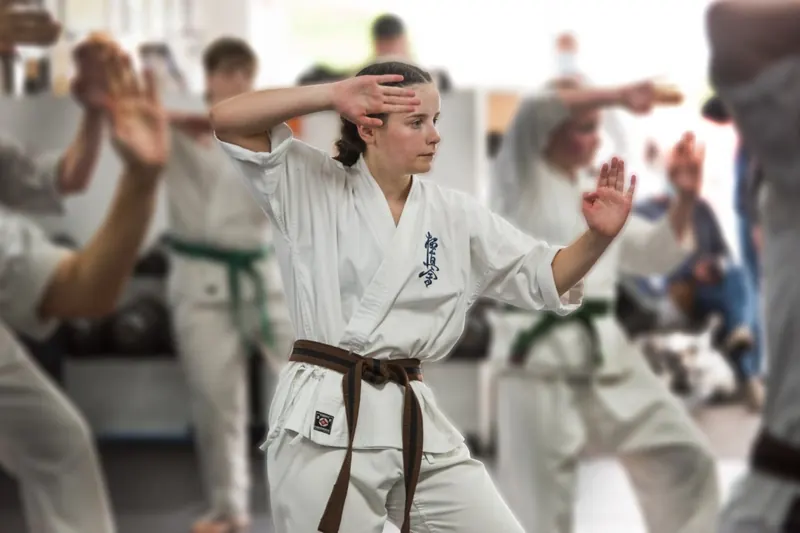
Everyone wants to learn the flashy stuff, but the fundamentals are what make it work. In Kyokushin that means stance, guard, basic punches, kicks and blocks. In Jiu-Jitsu it means posture, base, escapes and holding good positions.
- Treat every warm-up drill as real training, not something to rush through.
- When you learn a technique, ask the coach what the one most important detail is.
- Expect to feel clumsy for the first few weeks. That is normal and it passes.
From the mat: Black belts are not people who know secret moves. They are people who have done the basics thousands of times.
Leave your ego at the door
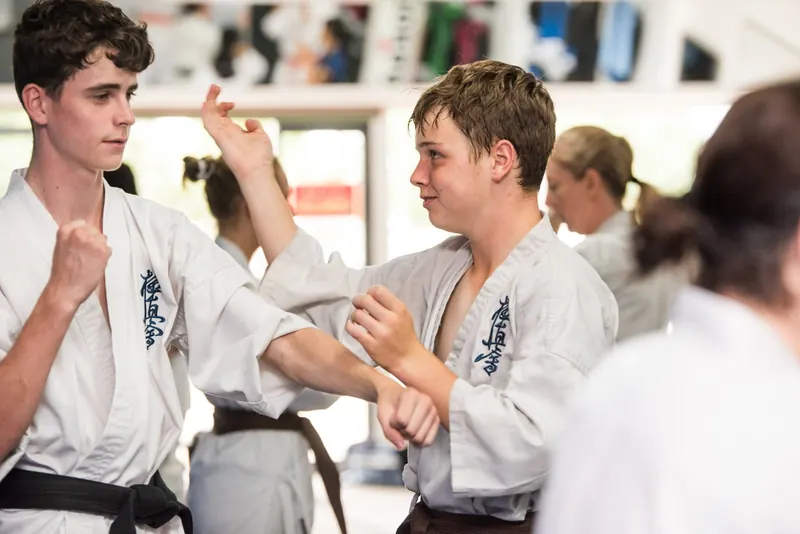
You will be tapped, out-pointed and corrected, sometimes by people smaller or younger than you. That is how everyone learns. The students who progress fastest are the ones who stay relaxed, curious and safe with their partners.
- In Jiu-Jitsu, tap early and tap often. There is no prize for holding on.
- Match your partner's pace and control your power, especially with beginners.
- Thank your partners. A good training partner gets invited back.
From the mat: A good dojo runs on trust. Look after your partners and they will look after you.
Look after your body
Training is physically demanding, especially in the first month. A little care outside class keeps you on the mat and avoids setbacks.
- Drink water through the day, not just at class.
- Prioritise sleep, which is when your body recovers and adapts.
- Tell your instructor about any injury or medical condition before class.
- Sore is normal. Sharp pain is not. Stop and tell a coach if something hurts.
From the mat: Missing one class to recover is better than missing a month with an injury.
Set small goals and ask questions
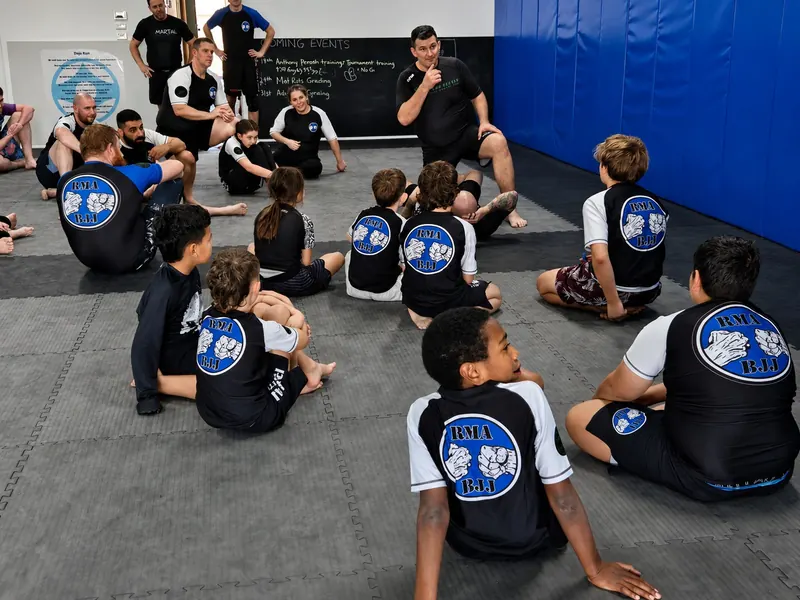
Belts are a long-term goal. Short-term goals keep you moving: landing a combination cleanly, escaping a position, or remembering a kata. Coaches love questions, and asking is the quickest way to improve.
- Choose one thing to work on each week and tell your coach what it is.
- Jot down two or three notes on your phone after class.
- Ask what you need to work on for your next stripe or grading.
From the mat: Progress in martial arts is rarely a straight line. Small wins each week add up to big changes in a few months.
Ready to start?
Put this into practice
New students start with two weeks of unlimited classes for $49.95. No experience needed and no obligation to join.
Book a trial class ›By the instructors at Cirillo's RMA, 10 Probert Ave, Griffith NSW. Questions? Call 0427 630 488.